
In politics, history is not only written by those who hold power at a particular moment. It is also written by those who survive political storms, maintain the trust of their communities, and continue to command support when many expect them to disappear.
Zandile Gumede’s political journey is one of the most debated examples of this reality in contemporary South African politics. Her story is not only about an unjust and politically captured court systems, it is about the price you pay for leaning towards Zuma, resilience, public support, and the question of who ultimately decides the future of a political leader.
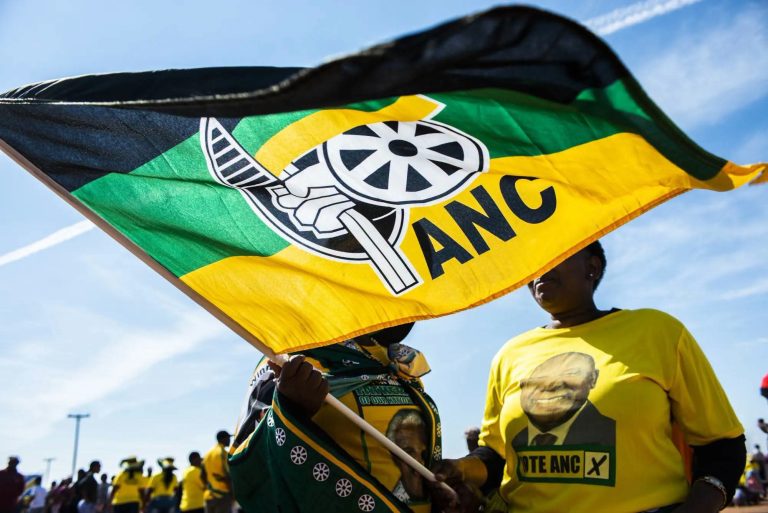
For years, Gumede remained a powerful figure in KwaZulu-Natal politics. Even during a period when the ANC’s step-aside rule was used against her.
Her support did not dwindle.
It sent a message that political influence cannot simply be removed through a party’s internal process.
But the people are not naive. They follow political developments, and they make their own judgments. And they chose Gumede.
While the policy was presented as a way to strengthen accountability, we questioned whether political consequences were being imposed before legal conclusions were reached. And we were right. Because, as if we ever needed convincing, President Ramaphosa was in charge of the NPA and the criminal justice system -and was using it for political leverage and the annihilation of his political detractors. Ace Magashule, Bongani Bongo, Mosebenzi Zwane, Busisiwe Mkhwebane, Judge John Hlophe, Brian Molefe and Siyabonga Gama were the starting line…
The political environment in which these events unfolded also marked deep divisions within the ANC. The battles between the factions influenced how people viewed the application of the Step Aside rule and by early 2018 it was clear that political interests and legal processes had become closely intertwined.
As irony would have it, inner circle Ramaphosa’s Nosiviwe Mapisa-Nqakula and Zizi Kodwa soon suffered the ANC’s threshing floor. Instead of only targeting opponents of the CR17 camp, the sword fell on Ramaphosa’s faction, damaging the credibility of the so called “renewal” programme.
Ramaphosa’s own admission that the ANC was “accused number one” raised questions about his leadership, because despite recognising the crisis within the organisation, his administration failed to deliver the decisive reforms needed to restore public trust.
As leader of the ANC and the country, Ramaphosa carried the responsibility of turning promises of renewal into practical action. But vengeance won the day. And the RET faction wasn’t dying.
Acknowledging that the ANC was “accused number one” was an admission of failure, because it confirmed that the party’s own leadership had not prevented misconduct and that Zuma was not the problem.
The failure of the Step-Aside policy was embedded in factionalism and was influenced by internal ANC politics. Some members were pressured to step aside, while others remained politically influential despite facing serious allegations. Gwede Mantashe and Nomvula Mokonyane faced serious allegations of misconduct in the BOSASA scandal, but they hadn’t been charged, because criminal charges followed a strict factional line.
Gumede’s decision to join the MK Party is therefore seen as more than a change of political organisation. It is a continuation of her political journey and an opportunity to remain connected with the people who had supported her throughout difficult circumstances.
The rise of the MK Party has shown that South African politics remains dynamic. It has attracted people who believe that existing political structures no longer fully represent their views.
Even with the trumped up charges, Gumede remained a figure with significant public support. Her ability to maintain a political base during one of the most challenging periods of her career demonstrated the strength of her connection with many voters.
In the end, democracy belongs to the people. Political parties can make decisions, institutions can investigate, and commentators can debate, but voters have the ultimate power.
The voters have chose Zuma. In KZN they chose Gumede. And they will choose them again.
Sifiso Mahlangu is the National Spokesperson of uMkhonto weSizwe Party. He writes in his personal capacity.
About the Author